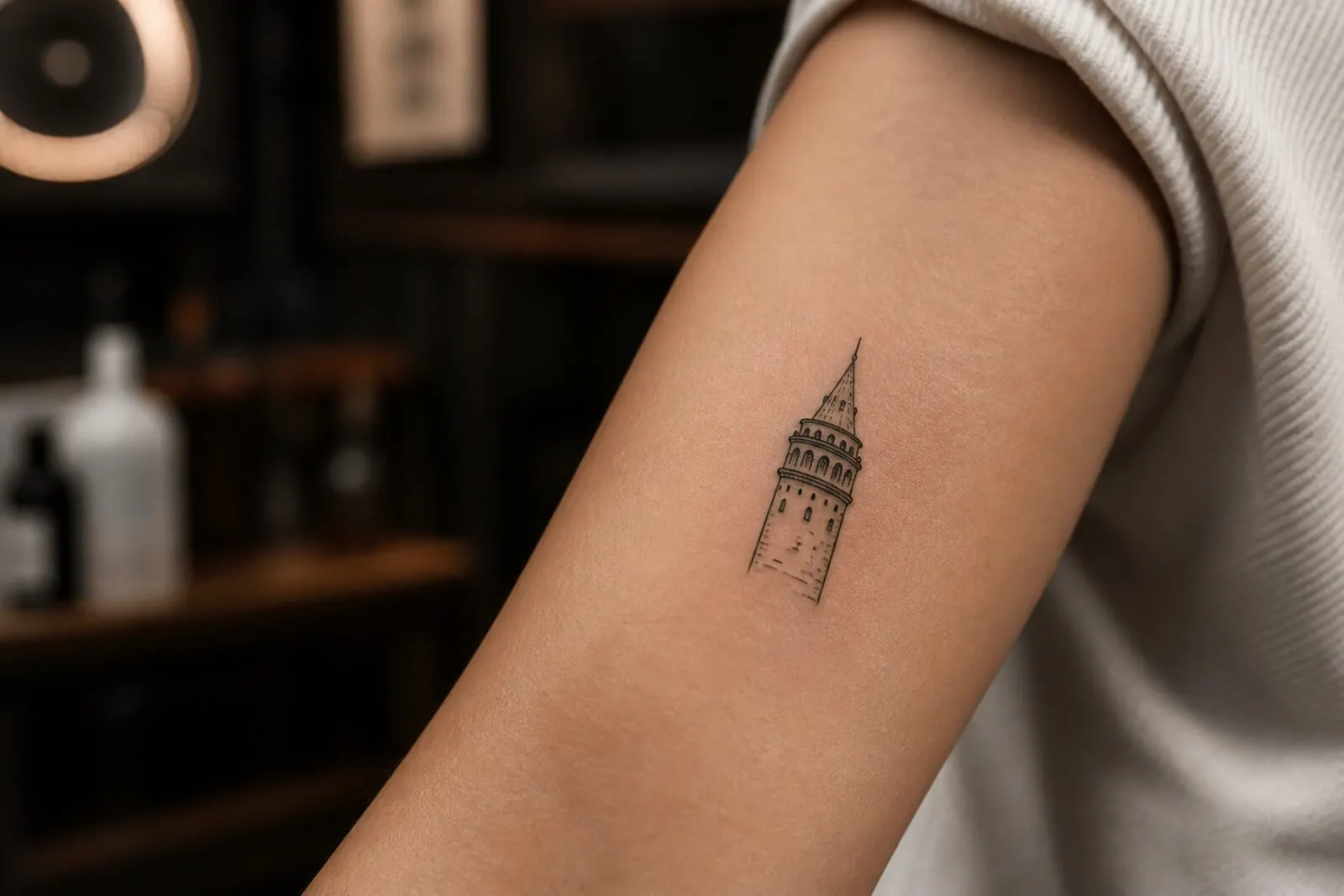
Fine line tattoos use single needles and minimal ink to create hair-thin strokes. The result is elegant and subtle — but that lightness also means the skin has less pigment to work with over time.
Understanding how they behave helps you choose placement, size, and aftercare with realistic expectations. If you are considering fine line in Istanbul, this guide covers what matters most.
How fine line tattoos age
Fine line work is designed to look delicate — and delicate work needs thoughtful planning. Very small designs below two centimetres can lose detail as skin regenerates; slightly larger pieces with breathing room age more gracefully.
Phone-screen beauty does not always survive on skin. Give lines room to breathe.
Once healed, daily SPF on exposed areas is the single best long-term habit. Even in Istanbul's winter light, cumulative UV softens fine strokes over the years. Simple botanicals, symbols, and script usually outperform micro-detailed portraits at miniature scale.
Best placements for fine line work
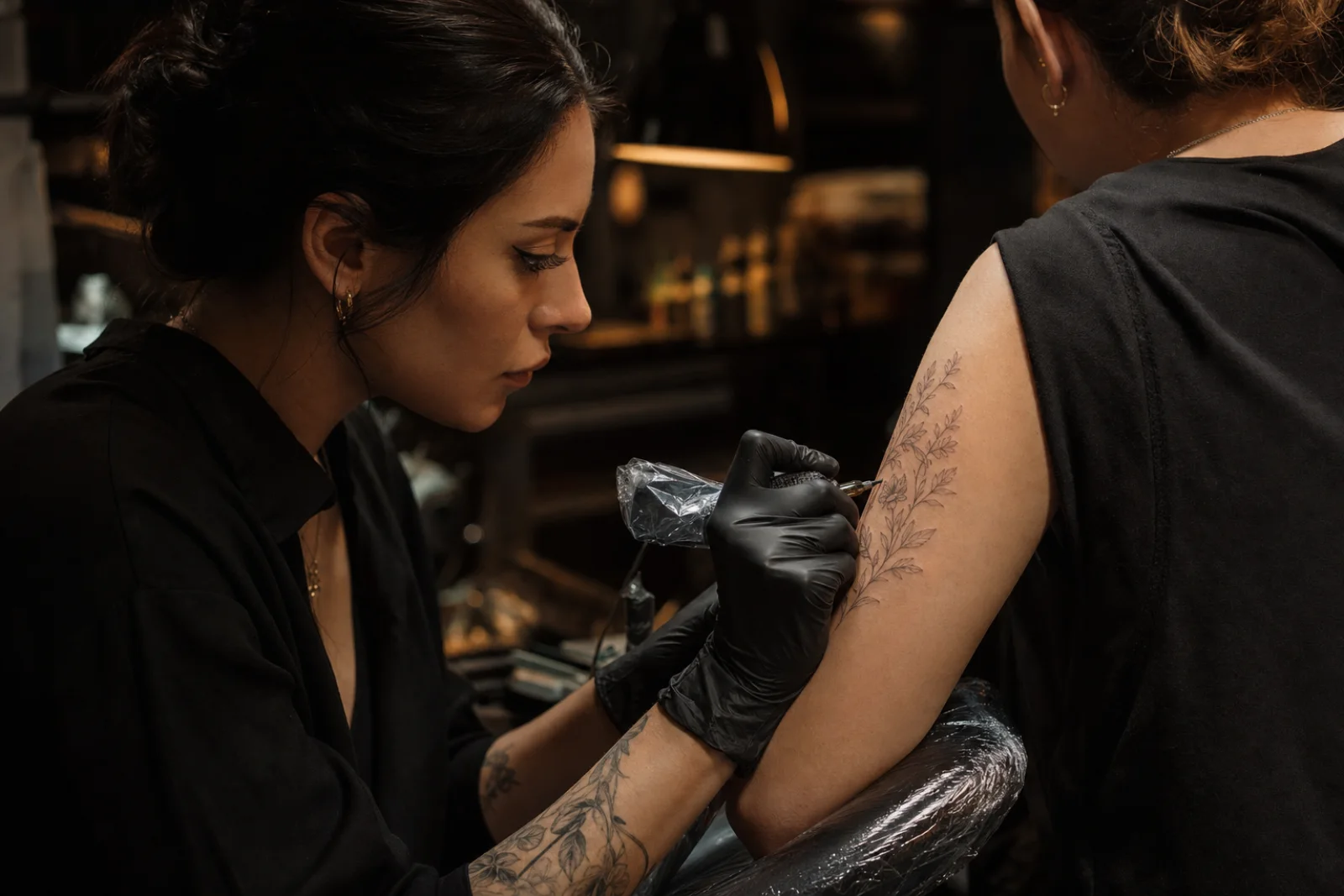
Placement matters more than with bolder styles. Areas with constant friction — inner wrists against desk edges, finger sides, feet in shoes — tend to fade faster.
Hold up well
Ribs, outer forearm, upper arm, and shoulder blade — less daily abrasion and less direct sun when clothed.
Fade faster
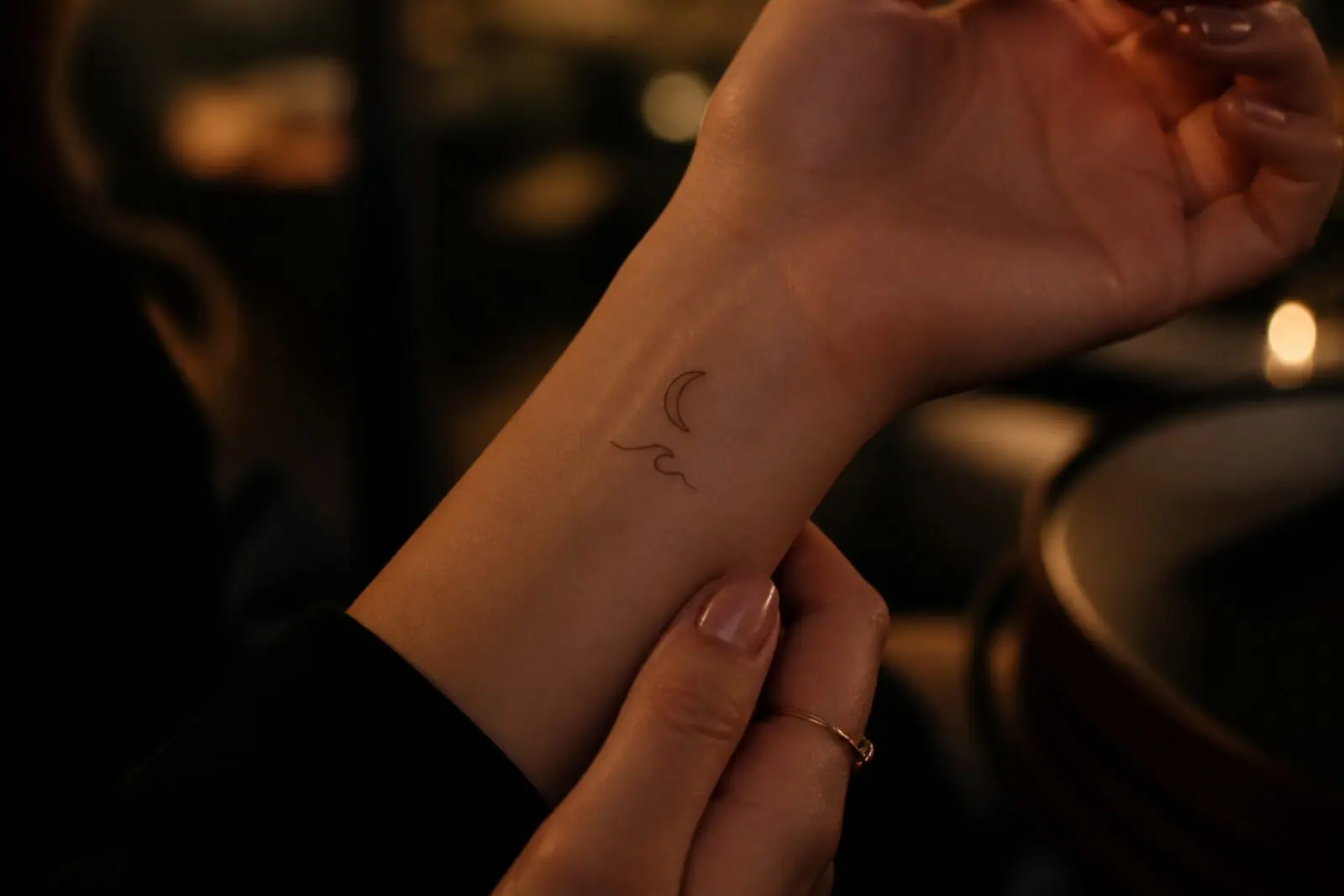
Inner wrists, finger sides, feet in shoes, and areas with constant friction or sun exposure.
Size matters
Very small designs below two centimetres can lose detail. Slightly larger pieces with breathing room age more gracefully.
We design with future touch-ups in mind when needed, and we are honest if an idea is too detailed for a spot that will not hold. Explore more styles on our tattoo hub.
Healing habits for delicate linework
Healing fine line work requires the same discipline as any tattoo, with extra caution around scabbing. Heavy scabs can pull ink from thin lines.
- Keep moisturiser thin — less is more during healing
- Do not pick or scratch scabs or flakes
- Wash gently twice daily with mild, fragrance-free soap
- Wear loose clothing that does not rub the area
- Avoid sun, swimming, and soaking for the first two to three weeks
- Apply SPF 50 once fully healed and the skin feels smooth
Travelling? Plan your session with aftercare in mind — see our guide on getting a tattoo in Istanbul for timing tips.
Touch-ups and long-term care
Touch-ups are normal for fine line, not a sign of poor work. Most clients revisit at six to twelve months if a line has softened.
We are honest if an idea is too detailed for a placement that will not hold. A quick consultation — in person or on WhatsApp — saves disappointment later.
Plan your fine line tattoo
If you are considering fine line during a visit to Galata, bring reference images and discuss size and placement in your consultation. Message us on WhatsApp to share your idea and travel dates — we will tell you honestly what will read well on skin and what might need adjusting before the needle touches you.